
Summary: Reducing disposable glove contamination requires comprehensive strategies that address product quality, user behavior, and operational protocols across high-risk environments. Healthcare facilities, laboratories, emergency services and even hospitality operations face contamination from improper nitrile glove usage, inadequate hand hygiene before donning, cross-contamination between tasks, and quality failures in glove products themselves. Patient safety incidents, laboratory result compromises, liability exposure, and foodborne illness outbreaks result when contamination prevention receives insufficient attention. Strategic approaches combining proper nitrile glove selection, staff training, quality assurance, and evidence-based protocols protect both staff and those they serve while demonstrating commitment to safety standards.
Understanding Contamination Pathways Across High-Risk Environments
Your organization’s safety reputation depends on consistent practices that protect against contamination risks. Disposable nitrile gloves serve as critical barriers between workers and potential hazards, yet they create false security when staff misunderstand their proper use. Many safety managers discover that glove programs intended to enhance protection actually introduce new contamination pathways when implementation lacks comprehensive planning.
Reducing disposable glove contamination starts with understanding how contamination occurs. Healthcare workers who don nitrile gloves without proper handwashing transfer pathogens from unwashed hands to glove surfaces, then directly to patients or medical equipment. Laboratory technicians who wear the same gloves across multiple samples risk cross-contamination that compromises test results.
The regulatory environment surrounding glove use has intensified across industries. OSHA bloodborne pathogen standards mandate barrier protection in healthcare settings. Laboratory accreditation standards require contamination control protocols. FDA Food Code requirements restrict bare hand contact with ready-to-eat foods. Understanding effective contamination prevention protects both staff safety and organizational compliance across these diverse high-risk environments.
Product Quality Standards That Prevent Contamination
The foundation for contamination prevention begins with selecting nitrile gloves that meet rigorous quality standards. Not all disposable nitrile gloves provide equivalent barrier protection, with significant variability existing between manufacturers based on production processes, quality controls, and material specifications.
Critical quality indicators for high-risk environment nitrile gloves include:
- FDA 501(k) Clearance and ASTM Compliance: Medical-grade nitrile gloves must meet FDA requirements and ASTM performance standards that verify barrier integrity, puncture resistance, and material strength throughout use.
- Lot-to-Lot Consistency: Manufacturing quality controls that deliver consistent nitrile glove performance across production lots prevent situations where some shipments provide adequate protection while others contain defects that compromise safety.
- Accelerated Aging Verification: Testing that confirms nitrile gloves maintain barrier properties throughout shelf life protects operations from degraded products that appear intact but provide inadequate protection.
- Chemical Resistance Documentation: Nitrile gloves used in healthcare, laboratory, and emergency settings must demonstrate resistance to disinfectants, medications, bodily fluids, and hazardous materials specific to each environment.
Domestic nitrile glove manufacturers with vertically integrated operations and ISO 13485 certification provide advantages for reducing disposable glove contamination. Manufacturing facilities producing 2.5 billion nitrile gloves annually from 7 million square feet of domestic capacity demonstrate the scale and quality infrastructure that high-risk operations require.
Learn More: Nitrile Glove Quality Indicators for Healthcare Procurement Directors
Hand Hygiene Protocols That Support Glove Effectiveness
Disposable nitrile gloves don’t eliminate the need for proper hand hygiene—they supplement it. One of the most common misconceptions across high-risk environments involves workers who believe that wearing nitrile gloves replaces handwashing requirements. This misunderstanding creates significant barriers when workers don gloves over unwashed hands, then transfer bacteria or pathogens directly to patients, food, specimens, or equipment.
Implement these hand hygiene practices for reducing disposable glove contamination:
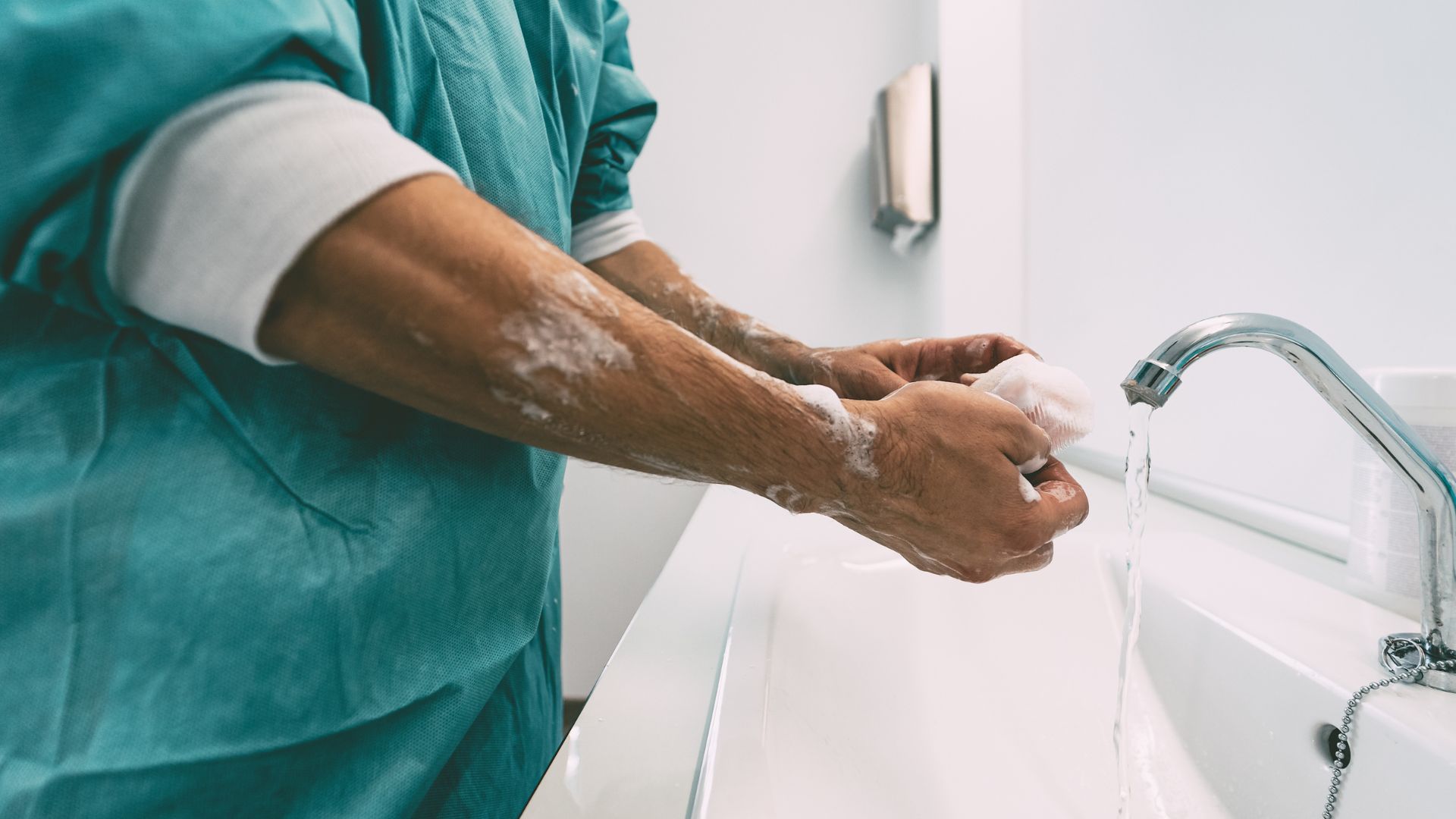
- Pre-Donning Handwashing: Require staff to wash hands with soap and water for at least 20 seconds immediately before putting on disposable nitrile gloves, eliminating pathogens that would otherwise transfer to glove surfaces.
- Task-Specific Glove Changes: Establish clear protocols requiring nitrile glove changes between different activities, particularly when transitioning from contaminated to clean environments or between patient care tasks in healthcare settings.
- Post-Removal Handwashing: Train staff to wash hands after removing nitrile gloves, addressing contamination that occurs during the glove removal process when exterior glove surfaces contact skin.
Research demonstrates that proper handwashing before gloving reduces bacterial transfer by up to 99%, while inadequate hand hygiene negates the protective benefits that nitrile gloves should provide. Your training programs must emphasize this critical connection to ensure staff understand that gloves and handwashing work together.
Cross-Contamination Prevention Through Proper Glove Usage
Even when staff don clean nitrile gloves over properly washed hands, contamination prevention requires understanding cross-contamination pathways. Healthcare workers who touch computer keyboards, door handles, or medical charts between patient care tasks transfer pathogens. Laboratory technicians who handle multiple specimens without changing gloves compromise sample integrity.
Critical glove change triggers include:
- Contaminated to Clean Transitions: Require immediate nitrile glove changes when staff move from handling contaminated materials to clean environments, preventing cross-contamination of pathogens in healthcare, laboratory, and emergency response settings.
- Non-Critical Task Interruptions: Mandate glove changes after staff handle phones, computers, door handles, or perform any activity outside direct protected work, eliminating contamination from environmental surfaces.
- Visible Contamination or Damage: Train workers to immediately replace nitrile gloves that become torn, punctured, or visibly soiled, ensuring barrier integrity throughout activities.
- Time-Based Changes: Implement maximum wear time policies requiring glove changes based on manufacturer recommendations and task intensity, addressing contamination buildup that occurs even without visible soiling.
Color-coded nitrile glove systems help staff maintain proper protocols. Assigning specific glove colors to different work areas or tasks creates visual reminders that reinforce proper usage and support reducing disposable glove contamination.
Staff Training Programs That Build Safety Culture
Contamination prevention requires more than written policies—it demands comprehensive training that builds genuine understanding of safety principles. Staff members who understand why nitrile glove protocols matter demonstrate better compliance than those who view requirements as arbitrary rules.
Develop training programs that include:
- Contamination Pathway Education: Teach staff how pathogens transfer from hands to nitrile gloves to patients, food, specimens, or equipment, using visual demonstrations that make invisible contamination risks tangible and memorable.
- Proper Donning and Removal Techniques: Demonstrate correct methods for putting on nitrile gloves without contaminating the exterior surface and removing gloves without touching the contaminated outer layer, skills that require practice to master.
- Scenario-Based Learning: Present realistic work situations and ask staff to identify when glove changes are required, building decision-making skills that translate to actual work environments.
Hands-on training with immediate feedback proves more effective than lecture-based approaches. Allow staff to practice donning and removing nitrile gloves while trainers observe and correct technique. This experiential learning approach supports reducing disposable glove contamination by developing muscle memory and decision-making skills.
Monitoring and Quality Assurance Systems
Even comprehensive training programs require ongoing monitoring to ensure staff maintain proper nitrile glove usage practices. Effective monitoring systems provide accountability while identifying training gaps that require additional attention.
Establish monitoring practices including:
- Scheduled Observations: Conduct formal nitrile glove usage observations during different shifts and work periods, ensuring that monitoring captures compliance patterns across your entire operation.
- Peer Accountability Systems: Train experienced staff members to remind colleagues about proper glove usage, creating a culture where safety becomes everyone’s responsibility.
- Corrective Action Documentation: Record glove usage violations and the corrective actions taken, building documentation that demonstrates your commitment to safety during inspections.
Your ability in reducing disposable glove contamination depends significantly on supplier quality. Domestic nitrile glove manufacturers with vertically integrated operations offer distinct benefits. When suppliers control every production step from raw materials to finished nitrile gloves, you gain confidence in consistent quality. Request detailed quality documentation including FDA 501(k) clearance, ASTM performance test results, and lot-to-lot consistency data from potential suppliers.
If your large healthcare or hospitality organization is evaluating nitrile glove manufacturing, Health and Hospitality Supply provides comprehensive quality documentation and high-risk environment expertise. Contact us to discuss how our vertically integrated domestic manufacturing and ISO 13485 certified quality systems can support your safety protocols while delivering consistent barrier protection.